詞彙表
每個專案都可以包含一個或多個詞彙表,用於儲存術語和它們偏好的譯文。詞彙表透過在翻譯編輯器中顯示相符的術語幫助保持譯文一致性。
詞彙表是具有特殊行為的一般翻譯組件。來源語言會儲存 Weblate 在來源字串中搜尋的詞彙。每個詞彙表翻譯會針對一種目標語言,儲存偏好詞彙、停用詞彙或不翻譯項目。
詞彙表中包含目前所翻譯來源字串內文字的詞彙,會顯示在翻譯編輯器的側邊欄。
提示
除非啟用,否則不會在品質檢查中使用詞彙表術語,請參閱 與詞彙表不同 瞭解更多資訊。
詞彙表相符如何工作
翻譯一般組件時,Weblate 會在來源字串中搜尋專案詞彙表來源語言內的詞彙。找到相符詞彙時,Weblate 會查詢目前所翻譯語言的對應詞彙表項目,並在編輯器中顯示。
這表示詞彙表項目必須存在於目標詞彙表語言中,才會在翻譯該目標語言時顯示。僅含來源語言的詞彙表仍可儲存定義及情境,但若某種語言沒有詞彙表項目,就無法提供該目標語言的相符詞彙。
若要讓詞彙存在於每個詞彙表語言中,請將來源項目標記為 專有名詞。若詞彙在每種語言中都應保持不變,請使用 不可翻譯的術語;只有在希望 Weblate 為所有詞彙表語言建立並維護項目時,才同時套用術語標記。
管理詞彙表
在 4.5 版的變更: 詞彙表現在是一般的翻譯組件,您可以在其中使用所有 Weblate 功能——評論、儲存在遠端儲存庫中或新增解釋。
使用任何組件作為詞彙表,方法是開啟 當作詞彙表。您可以為一個專案建立多個詞彙表。
給定專案的空詞彙表會隨專案自動建立。詞彙表在同一個專案的所有組件之間共享,並且可以選擇使用來自相應詞彙表組件的 分享專案 與其他專案共享。
詞彙表組件看起來與 Weblate 中的其他組件一樣,只是多了個彩色標籤:
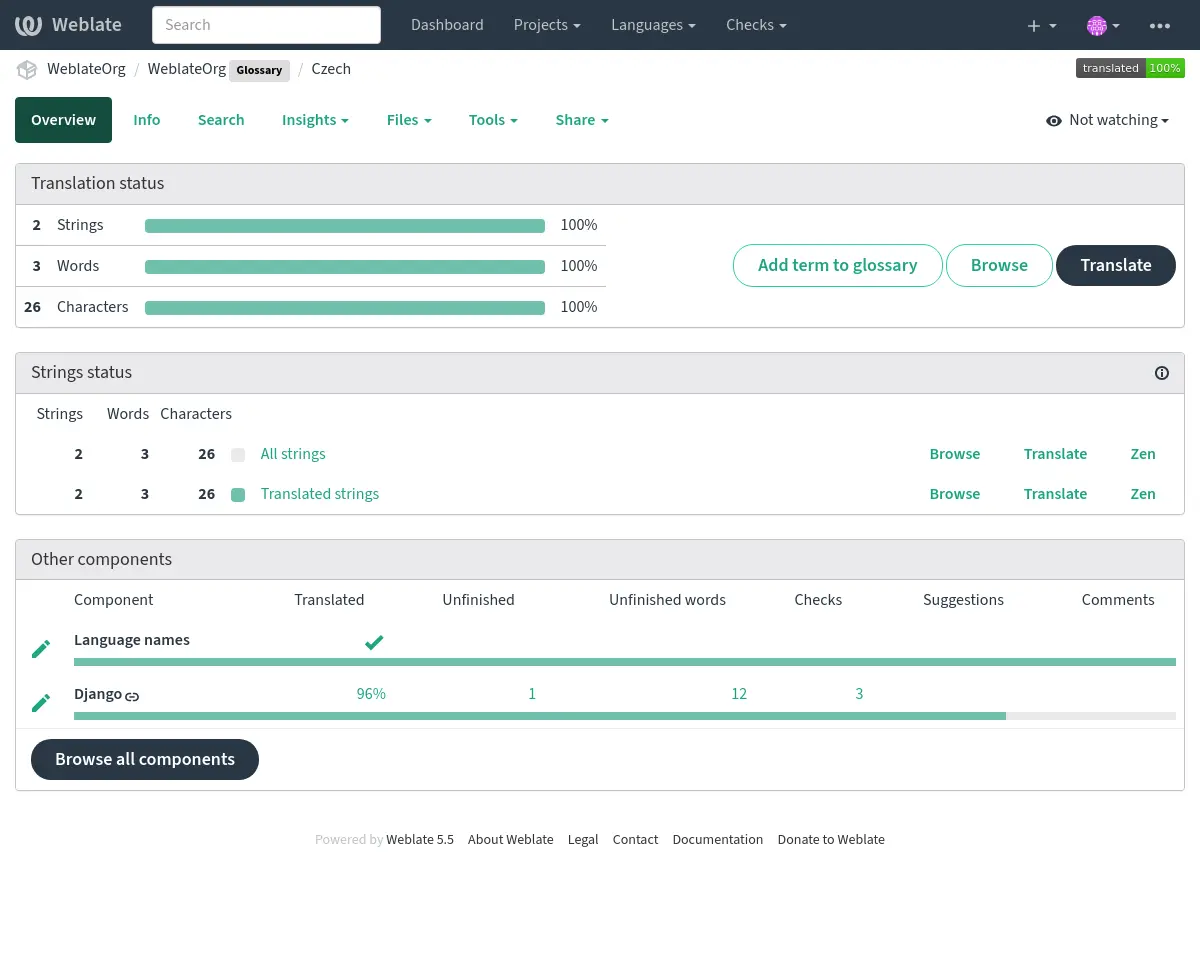
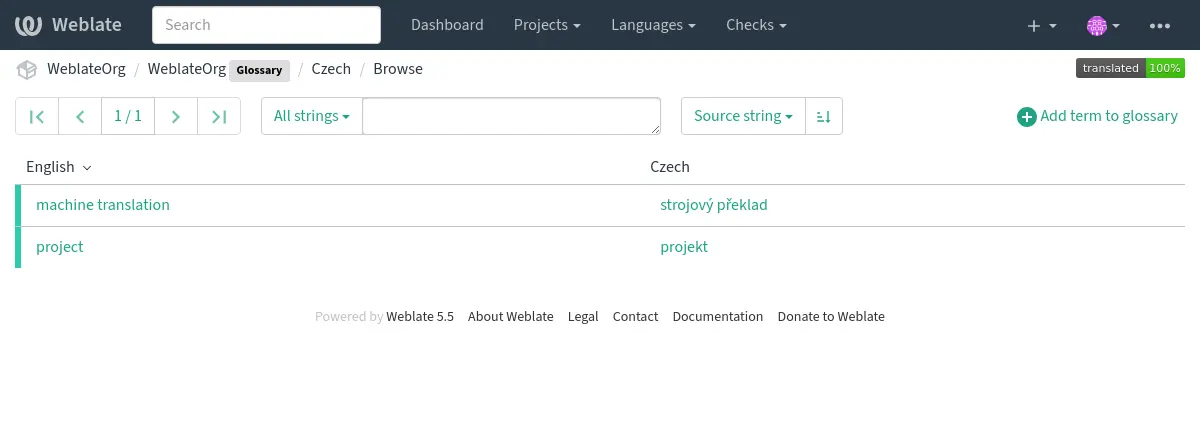
您可以瀏覽所有詞彙表術語:
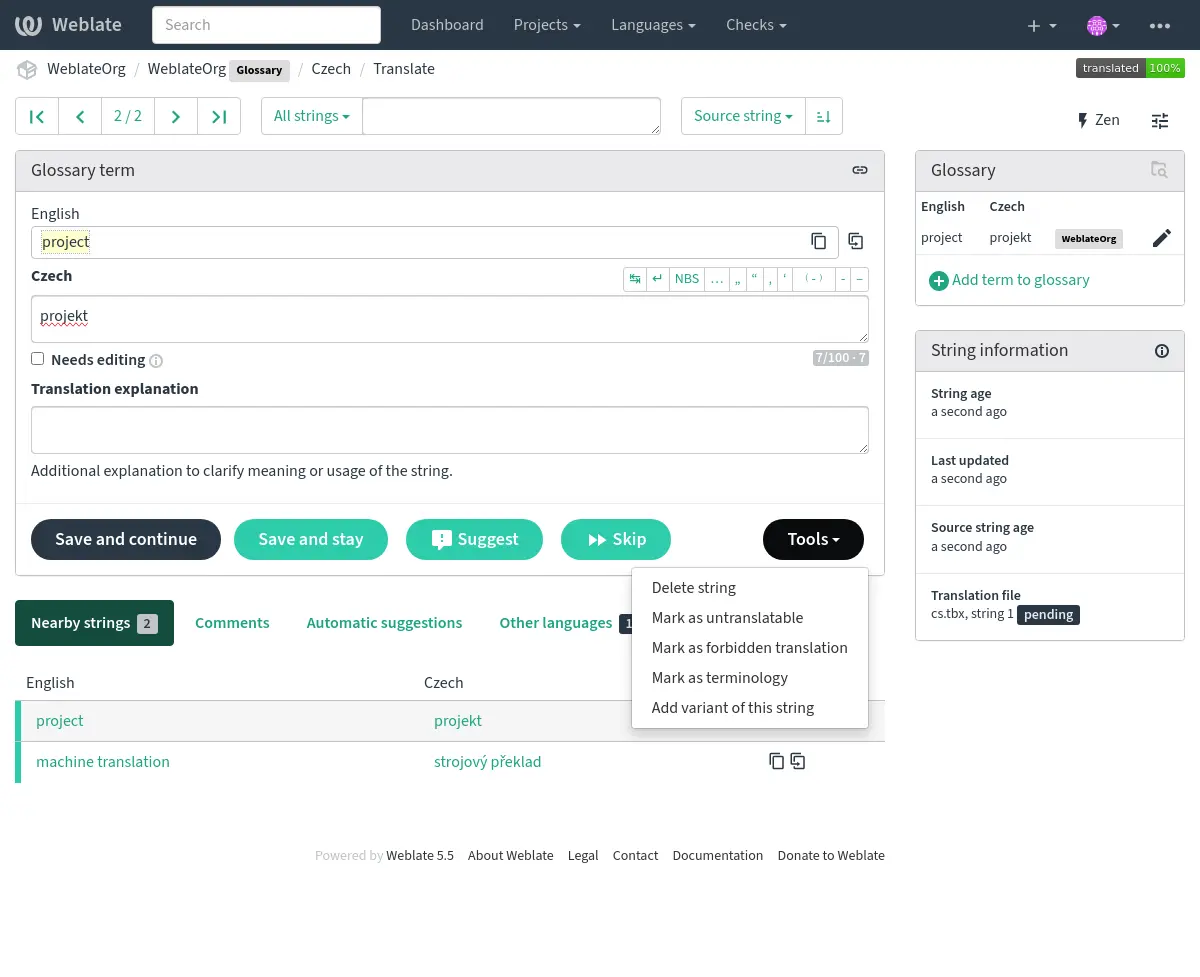
或將它們當作任何翻譯進行編輯。
詞彙表術語
詞彙表的翻譯方式與普通字串的翻譯方式相同。您可以使用每個術語的 工具 選單為每個術語切換附加功能。
也參考
類型 |
目的 |
|---|---|
一般的詞彙表術語 |
一或多種語言中詞彙的偏好翻譯或說明。 |
Weblate 會在每個詞彙表語言中保留的來源詞彙,以便追蹤及補上缺少的翻譯。 |
|
應保持不變或不應翻譯的詞彙。 |
|
不應用於源術語的譯文。 |
|
與另一個詞彙表詞彙歸為同一組的替代用語、縮寫或簡稱。 |
選擇詞彙表術語
選擇詞彙表詞彙時,應考量語意及目標讀者,不應只看字面形式。若來源詞彙可能有多種意思,請加入說明,讓翻譯者知道專案採用的語意。
詞彙表項目特別適合品牌名稱、縮寫、產品功能、技術詞彙,以及新創或音譯詞。請將縮寫或較短用語設為變體、將重要的跨語言詞彙標記為 專有名詞、將應保持不變的詞彙標記為 不可翻譯的術語,並將容易造成誤解的翻譯標記為 禁止的翻譯。
不可翻譯的術語
在 4.5 版被加入.
透過批次編輯、輸入旗標,或選擇 工具 ↓ 將此翻譯標記為不可翻譯,將特定詞彙表詞條的譯文標記為 read-only,代表這些詞條無法翻譯。品牌、產品名稱、網域、技術名稱或其他不應翻譯成其他語言的詞語,都適合使用此標記。這類詞條會在詞彙表側邊欄中特別標示。
若要讓某個詞語在所有語言中都維持原樣,請選擇 為所有語言標記為不可翻譯。若目前譯文已標記為不可翻譯,選擇 將不可翻譯套用至所有語言 會把該旗標移至來源字串。禁止翻譯的設定依語言而異;術語則套用於所有語言。
當詞彙表項目已存在於應顯示的語言中時,只使用 read-only 旗標即可。只有在 Weblate 應於每個詞彙表語言中建立並維護不翻譯項目時,才另行加入 專有名詞 旗標。
也參考
禁止的翻譯
在 4.5 版被加入.
透過批次編輯、輸入標記或使用 工具 ↓ 標記為禁止的譯文 來將某些詞彙表術語譯文標記為 forbidden 意味著它們 不能 被使用。當某些字詞模稜兩可或可能具有意想不到的含義時,使用它來澄清譯文。
應避免使用的翻譯請設為停用項目;偏好的翻譯則使用一般詞彙表項目。
也參考
專有名詞
在 4.5 版被加入.
透過批次編輯、輸入旗標,或選擇 工具 ↓ 標記為所有語言的術語,將特定來源語言詞彙表詞條標記為 terminology,即可將詞條新增至所有語言的詞彙表。重要詞語若需要審慎斟酌,並應在所有語言中維持一致含義,就適合使用此標記。
在詞彙表組件啟用 管理字串,即可同步術語。停用後,即使是標記為術語的詞條,Weblate 也不會建立缺少的語言項目。
若未設定遠端儲存庫的詞彙表已停用字串管理,或其他含有術語的詞彙表已停用字串管理,Weblate 會顯示可關閉的 診斷訊息。啟用字串管理,即可直接在 Weblate 新增詞條並同步術語;若你會另行維護詞彙表檔案,也可以關閉此警告。
術語標記是持續的狀態,非一次性動作。當標記保留在源術語上時,Weblate 將其視為專業術語並在每個詞彙表語言中為它保留一個條目。如果刪除了一個語言條目,那麼下次詞彙表同步會再建立它。
刪除 terminology 標記停止自動維護,但不刪除或撤銷已建立的條目。它們仍為一般詞彙表條目。
一般詞彙表詞彙也可以在每種語言中都有翻譯。差別在於,一般詞彙的語言項目遭移除後,Weblate 不會重新建立缺少的項目。
也參考
變體
變體是將字串組合在一起的通用方式。在翻譯時,所有術語變體都列在詞彙表側邊條中。
提示
您可以使用它來新增縮寫或縮短表達式。
也參考
詞彙表匯入
和一般的翻譯組件類似,您可以將現有的詞彙表上傳到 Weblate。CSV 檔案 或 TermBase eXchange 格式 等格式受支援,可以被上傳,見 上傳翻譯。
TBX 檔案可包含說明、唯讀中繼資料及詞彙表旗標;如需確切的中繼資料對應方式,請參閱 TermBase eXchange 格式。
即使 TBX 可以包含多種語言,Weblate 仍會使用組件檔案遮罩及語言設定,將組件檔案對應至語言。對 TBX 詞彙表組件而言,請將組件來源語言設為來源詞彙的語言,並依翻譯檔案所代表的目標語言命名。請勿以組件來源語言命名翻譯檔案,因為該來源語言已存在於 Weblate 中,這可能導致偵測到重複語言。
語言檔案和同步
詞彙表組件會跟隨同一專案內一般組件所使用的語言。一般組件加入某種語言時,Weblate 也會加入缺少的詞彙表語言,以便顯示該語言的相符詞彙。
這項自動語言同步是刻意設計的行為。使用 語言篩選 過濾詞彙表語言檔案可減少受管理的檔案數,但也表示 Weblate 沒有詞彙表項目可向遭過濾的目標語言顯示。
術語項目也會同步。來源詞彙表詞彙標記為術語時,Weblate 會在所有詞彙表語言中建立缺少的項目;只要該旗標仍在,即使項目遭到移除也會重新建立。
Weblate 只有在詞彙表由 Weblate 管理、專案中沒有一般組件仍使用該語言,且過時的詞彙表翻譯不含已翻譯詞彙時,才能清理該翻譯。若過時的詞彙表語言仍包含詞彙,Weblate 會予以保留,並回報為未使用的詞彙表語言。
常見設定模式
自動建議中的詞彙表
在 5.3 版被加入.
一些自動建議服務在翻譯時使用詞彙表,具體支援情況請檢視 自動建議 中相關內容。
在被匯出到服務前,會先處理詞彙表:
需要唯一來源詞彙的服務會略過重複的來源項目。以 LLM 為基礎的服務則可接收含有說明的重複項目,以釐清其中差異。
所有控制字元,以及開頭與結尾的空白字元都會被移除。
禁止的翻譯 被跳過。
備註
許多服務會將詞彙表儲存在伺服器端,並限制可儲存的詞彙表數量。空間用盡時,Weblate 一律會刪除最舊的詞彙表。