சொற்களஞ்சியம்
Each project can include one or more glossaries for storing terms and their preferred translations. Glossaries help keep translations consistent by showing matching terms in the translation editor.
Glossaries are regular translation components with special behavior. The source language stores the terms Weblate searches for in source strings. Each glossary translation stores the preferred term, forbidden term, or untranslatable entry for one target language.
Terms from the glossary containing words from the currently translated source string are displayed in the sidebar of the translation editor.
Hint
நீங்கள் அதை இயக்கும் வரை தரச் சரிபார்ப்புகளில் சொற்களஞ்சியம் சொற்கள் பயன்படுத்தப்படாது, மேலும் தகவலுக்கு சொற்களஞ்சியத்தைப் பின்பற்றாது ஐப் பார்க்கவும்.
How glossary matching works
When you translate a regular component, Weblate searches the source string for terms from the source language of the project glossaries. When a term matches, Weblate looks up the corresponding glossary entry for the language currently being translated and shows it in the editor.
This means glossary entries need to exist in the target glossary language to be shown while translating that target language. A source-language-only glossary can still store definitions and context, but it will not provide target-language matches for languages that do not have glossary entries.
If you want a term to be present in every glossary language, mark the source entry as சொல். If the term should stay unchanged in every language, use மொழிபெயர்க்க முடியாத விதிமுறைகள்; combine it with terminology only when you want Weblate to create and maintain entries for all glossary languages.
மேலாத் சொற்களஞ்சியம்
Changed in version 4.5: சொற்களஞ்சியங்கள் இப்போது வழக்கமான மொழிபெயர்ப்பு கூறுகள் மற்றும் அவற்றில் உள்ள அனைத்து வலைபெயர்ப்பு அம்சங்களையும் நீங்கள் பயன்படுத்தலாம் - கருத்து தெரிவித்தல், தொலை களஞ்சியத்தில் சேமித்தல் அல்லது விளக்கங்களைச் சேர்ப்பது.
சொற்களஞ்சியமாக பயன்படுத்து ஐ இயக்குவதன் மூலம் எந்த ஒரு கூறுகளையும் சொற்களஞ்சியமாகப் பயன்படுத்தவும். ஒரு திட்டத்திற்காக நீங்கள் பல சொற்களஞ்சியங்களை உருவாக்கலாம்.
கொடுக்கப்பட்ட திட்டத்திற்கான வெற்று சொற்களஞ்சியம் திட்டத்துடன் தானாகவே உருவாக்கப்படும். கலைச்சொற்கள் ஒரே திட்டத்தின் அனைத்து கூறுகளிலும் பகிர்ந்து கொள்ளப்படுகின்றன, மேலும் விருப்பமாக மற்ற திட்டங்களுடன் தொடர்புடைய சொற்களஞ்சிய கூறுகளிலிருந்து திட்டங்களில் பங்கு ஐப் பயன்படுத்திப் பகிரப்படுகின்றன.
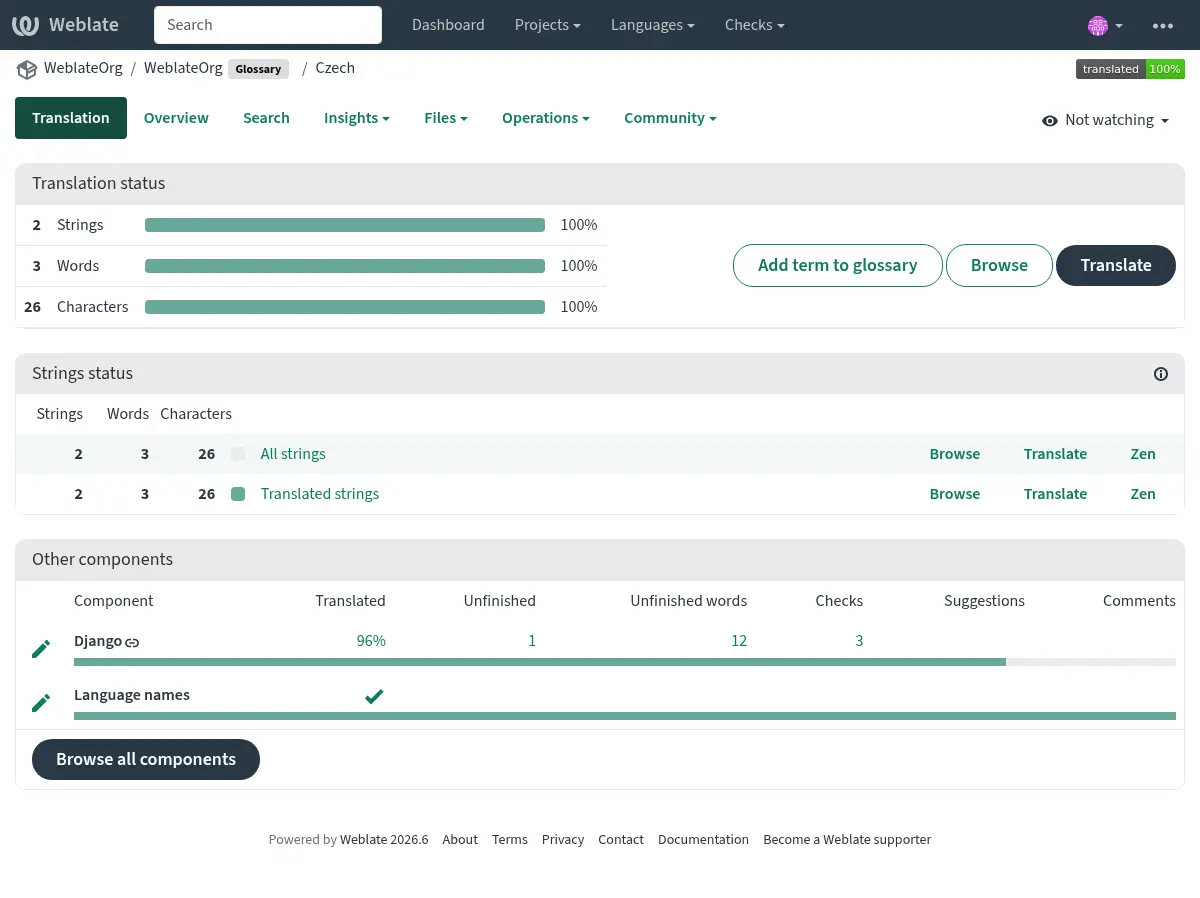
கூடுதல் வண்ண லேபிளுடன் வலைபெயர்ப்பில் உள்ள வேறு எந்த கூறுகளும் சொற்களஞ்சிய கூறு போல் தெரிகிறது:
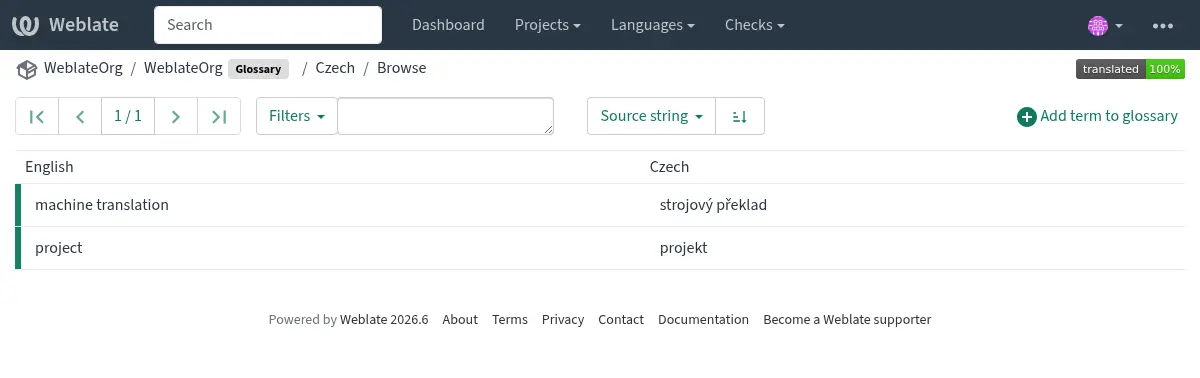
நீங்கள் அனைத்து சொற்களஞ்சிய சொற்களையும் உலாவலாம்:
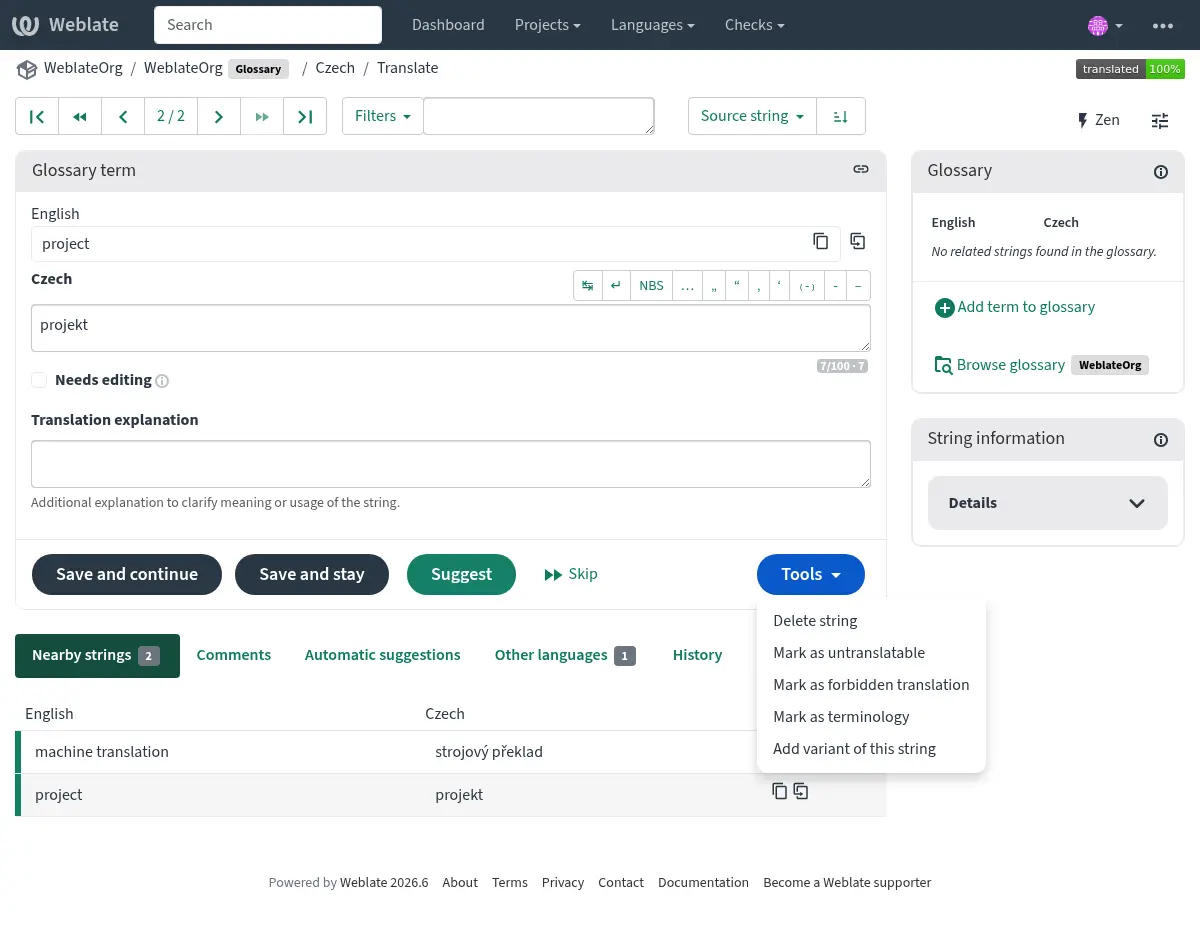
அல்லது அவற்றை எந்த மொழிபெயர்ப்புகளாகவும் திருத்தவும்.
சொற்களஞ்சியம் சொற்கள்
சொற்களஞ்சியம் சொற்கள் வழக்கமான சரங்களைப் போலவே மொழிபெயர்க்கப்படுகின்றன. ஒவ்வொரு சொல்லுக்கும் Tools மெனுவைப் பயன்படுத்தி கூடுதல் அம்சங்களை மாற்றலாம்.
See also
Type |
Purpose |
|---|---|
Regular glossary term |
Preferred translation or explanation for a term in one or more languages. |
Source term Weblate keeps present in every glossary language so missing translations can be tracked and filled. |
|
Term that should stay unchanged or should not be translated. |
|
Translation that should not be used for the source term. |
|
Alternative wording, abbreviation, or shorter form grouped with another glossary term. |
Choosing glossary terms
Choose glossary terms for meaning and audience, not only for literal word shape. If a source term is ambiguous, add an explanation so translators know which meaning applies in the project.
Glossary entries are especially useful for brand names, acronyms, product features, technical terms, and newly coined or transliterated words. Use variants for abbreviations or shorter wording, mark important cross-language terms as சொல், mark terms that should stay unchanged as மொழிபெயர்க்க முடியாத விதிமுறைகள், and mark misleading translations as தடைசெய்யப்பட்ட மொழிபெயர்ப்புகள்.
மொழிபெயர்க்க முடியாத விதிமுறைகள்
Added in version 4.5.
Flagging certain glossary term translations read-only by bulk-editing,
typing in the flag, or by using Tools ↓
Mark as untranslatable means they can not be translated. Use this
for brand names, product names, domains, technology names, or other terms that
should not be changed in other languages. Such terms are visually highlighted
in the glossary sidebar.
The read-only flag is enough when the glossary entry already exists in the
languages where it should be shown. Add the சொல் flag as
well only when Weblate should create and maintain the untranslatable entry in
every glossary language.
தடைசெய்யப்பட்ட மொழிபெயர்ப்புகள்
Added in version 4.5.
மொத்தமாகத் திருத்துதல், கொடியைத் தட்டச்சு செய்தல் அல்லது Tools ↓ தடைசெய்யப்பட்ட மொழிபெயர்ப்பாகக் குறி என்பதன் மூலம் குறிப்பிட்ட சொற்களஞ்சியம் சொற்களின் மொழிபெயர்ப்புகளை தடைசெய்யப்பட்டது எனக் கொடியிடுவது, அவை இல்லை பயன்படுத்தப்பட வேண்டியவை அல்ல. சில சொற்கள் தெளிவற்றதாகவோ அல்லது எதிர்பாராத அர்த்தங்களைக் கொண்டதாகவோ இருந்தால், மொழிபெயர்ப்பைத் தெளிவுபடுத்த இதைப் பயன்படுத்தவும்.
Use forbidden entries for translations that should be avoided. Use regular glossary entries for preferred translations.
சொல்
Added in version 4.5.
Flagging certain source-language glossary terms as terminology by
bulk-editing, typing in the flag, or by using Tools ↓
Mark as terminology adds entries for them to all languages in the
glossary. Use this for important terms that should be well thought out, and
retain a consistent meaning across all languages.
The terminology flag is ongoing state, not just a one-time action. While the flag remains on the source term, Weblate treats it as terminology and keeps an entry for it in every glossary language. If a language entry is removed, the next glossary synchronization creates it again.
டெர்மினாலசி கொடியை அகற்றுவது இந்த தானியங்கி பராமரிப்பை நிறுத்துகிறது, ஆனால் இது ஏற்கனவே உருவாக்கப்பட்ட உள்ளீடுகளை அகற்றாது அல்லது மாற்றாது. அவை வழக்கமான சொற்களஞ்சியம் உள்ளீடுகளாகவே இருக்கும்.
A regular glossary term can also have translations in every language. The difference is that Weblate does not recreate missing language entries for a regular term after they are removed.
மாறுபாடுகள்
மாறுபாடுகள் குழு சரங்களுக்கு ஒன்றாக ஒரு பொதுவான வழியாகும். மொழிபெயர்க்கும்போது அனைத்து கால மாறுபாடுகளும் சொற்களஞ்சிய பக்கப்பட்டியில் பட்டியலிடப்பட்டுள்ளன.
Hint
ஒரு காலத்திற்கு சுருக்கங்கள் அல்லது குறுகிய வெளிப்பாடுகளைச் சேர்க்க இதைப் பயன்படுத்தலாம்.
See also
சொற்களஞ்சியம் இறக்குமதி
வழக்கமான மொழிபெயர்ப்பு கூறுகளைப் போலவே, நீங்கள் ஏற்கனவே உள்ள சொற்களஞ்சியங்களை வலைபெயர்ப்பு இல் பதிவேற்றலாம். காபிம கோப்புகள் அல்லது டெர்ம்பேச் பரிமாற்ற வடிவம் போன்ற வடிவங்கள் ஆதரிக்கப்படுகின்றன, மேலும் அவற்றைப் பதிவேற்றலாம், பார்க்க மொழிபெயர்ப்புகளை பதிவேற்றுகிறது.
TBX files can include explanations, read-only metadata, and glossary flags; see டெர்ம்பேச் பரிமாற்ற வடிவம் for the exact metadata mapping.
Even though TBX can contain multiple languages, Weblate still maps component files to languages using the component file mask and language settings. For a TBX glossary component, keep the component source language as the source term language and name translation files for the target language they represent. Avoid naming a translation file with the same language as the component source language, because the source language already exists in Weblate and this can lead to duplicate language detection.
See also
Language files and synchronization
Glossary components follow the languages used by the regular components in the same project. When a language is added to a regular component, Weblate adds the missing glossary language as well so glossary matches can be shown for that language.
This automatic language synchronization is intentional. Filtering glossary language files with மொழி வடிகட்டி can reduce the number of managed files, but it also means Weblate has no glossary entries to show for filtered-out target languages.
Terminology entries are also synchronized. When a source glossary term is marked as terminology, Weblate creates missing entries in all glossary languages and recreates them if they are removed while the flag is still set.
Weblate can clean up stale glossary translations only for Weblate-managed glossaries, only when no regular component in the project still uses that language, and only when the stale glossary translation has no translated terms. If the stale glossary language still contains terms, Weblate keeps it and reports it as an unused glossary language.
Common setup patterns
- English-only explanatory glossary
Add source-language glossary terms with explanations. This works as a maintained term list, but it will not show target-language glossary matches unless you also create entries in the target glossary languages.
- Required terminology
Add terms in the source glossary language, mark them as சொல், and let translators fill the created entries in each target language. Use explanations to document the intended meaning.
- Non-translatable terms
Mark terms as மொழிபெயர்க்க முடியாத விதிமுறைகள் when they should stay unchanged. Add சொல் only when the term should be present in every glossary language for matching and review.
- தடைசெய்யப்பட்ட மொழிபெயர்ப்புகள்
Add the misleading translation as a தடைசெய்யப்பட்ட மொழிபெயர்ப்புகள் entry. Add the preferred wording as a separate regular glossary entry when translators should use a specific translation instead.
தானியங்கி ஆலோசனையில் சொற்களஞ்சியம்
Added in version 5.3.
Some automatic suggestion services utilize glossaries during the translation, please consult their documentation in தானியங்கி பரிந்துரைகள் to see the support.
சேவையை வெளிப்படுத்துவதற்கு முன்பு சொற்களஞ்சியம் செயலாக்கப்படுகிறது:
தனித்துவமான மூல விதிமுறைகள் தேவைப்படும் சேவைகளுக்கு நகல் மூல உள்ளீடுகள் தவிர்க்கப்படுகின்றன. LLM-அடிப்படையிலான சேவைகள் நகல்களை தெளிவற்ற விளக்கங்களுடன் பெறலாம்.
எந்தவொரு கட்டுப்பாட்டு எழுத்துக்களும், முன்னணி மற்றும் பின்தங்கிய இடைவெளிகளும் அகற்றப்படுகின்றன.
தடைசெய்யப்பட்ட மொழிபெயர்ப்புகள் தவிர்க்கப்பட்டது.
Note
பல சேவைகள் சொற்களஞ்சியங்களை சேவையக பக்கமாக சேமித்து, சேமித்த சொற்களஞ்சியங்களின் எண்ணிக்கையில் வரம்பை அமல்படுத்துகின்றன. வலைபெயர்ப்பு எப்போதும் மிகப் பழமையான சொற்களஞ்சியம் விண்வெளியில் இருந்து வெளியேறினால் அதை நீக்குகிறது.