Translation component diagnostics
Afișează erorile din configurația Weblate sau din proiectul de traducere pentru orice componentă de traducere dată. Se oferă, de asemenea, îndrumări cu privire la modul de soluționare a problemelor găsite.
În prezent, sunt acoperite următoarele:
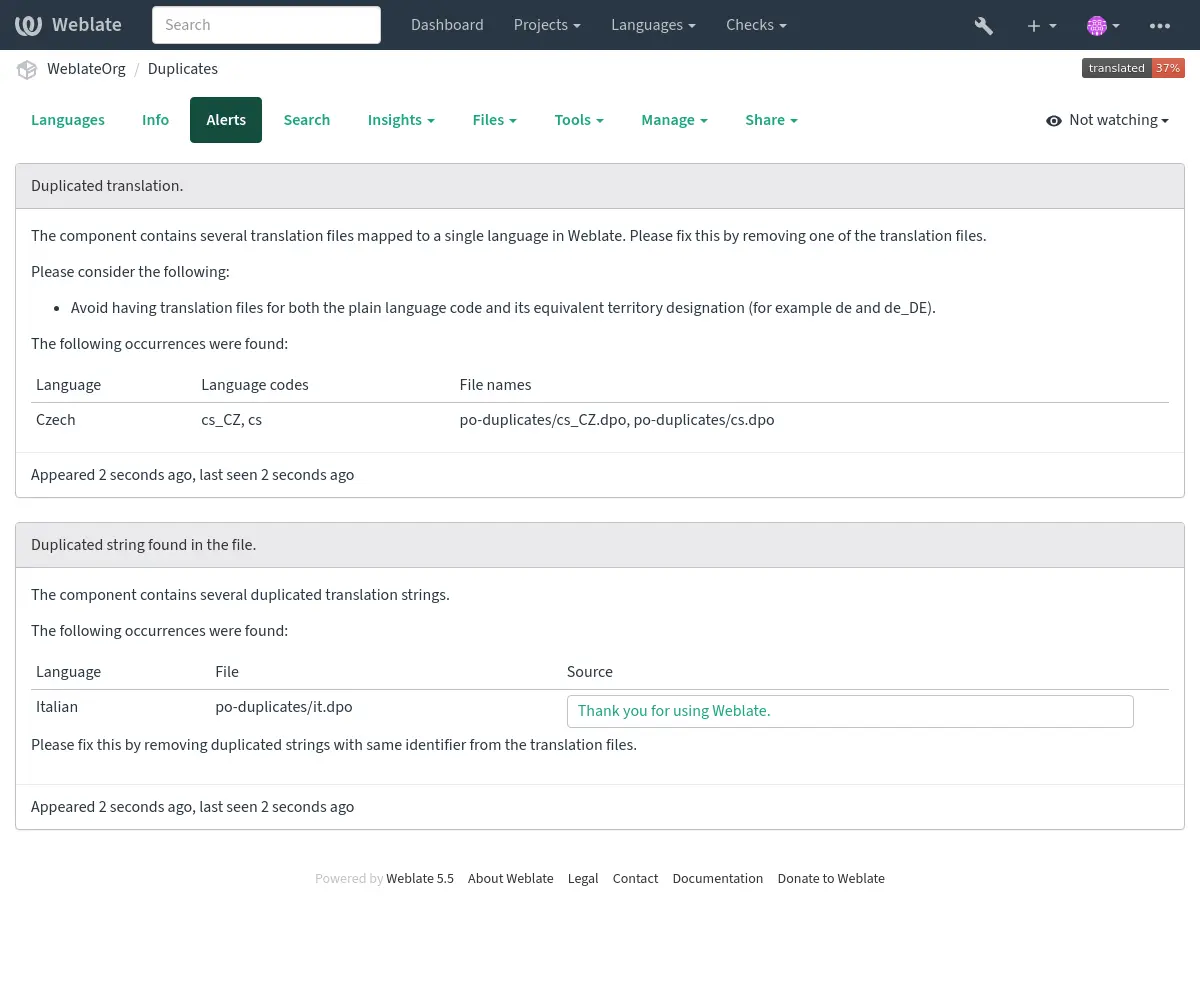
Șiruri sursă duplicate în fișierele de traducere
Limbi duplicate în cadrul traducerilor
Eșecuri de fuziune, actualizare sau împingere în depozit
Erori de parsare în fișierele de traducere
Limite de facturare (a se vedea Facturare)
Depozitul care conține prea multe comenzi ieșite sau lipsă
Licențe lipsă
Erori la rularea add-on-ului (vezi Suplimente)
Misconfigured monolingual or bilingual translation.
Întrerupt Configurația componentei
URL-uri defecte
Captură de ecran neutilizată
Cod lingvistic ambiguu
Baza nouă neutilizată în setările componentelor
Masca de fișier duplicat utilizată pentru componentele legate
Conflicting merge request repository setup
Component seems unused (configurable by
UNUSED_ALERT_DAYS)Unused glossary languages
Alertele sunt actualizate zilnic sau la fiecare modificare (de exemplu, când Configurația componentei se modifică sau când se actualizează depozitul).
Project website availability checks can be disabled using
WEBSITE_ALERTS_ENABLED, in which case Weblate will no longer
generate alerts for unreachable project websites.
Alerts are listed on each respective component page as Diagnostics.
Project and workspace diagnostics overviews
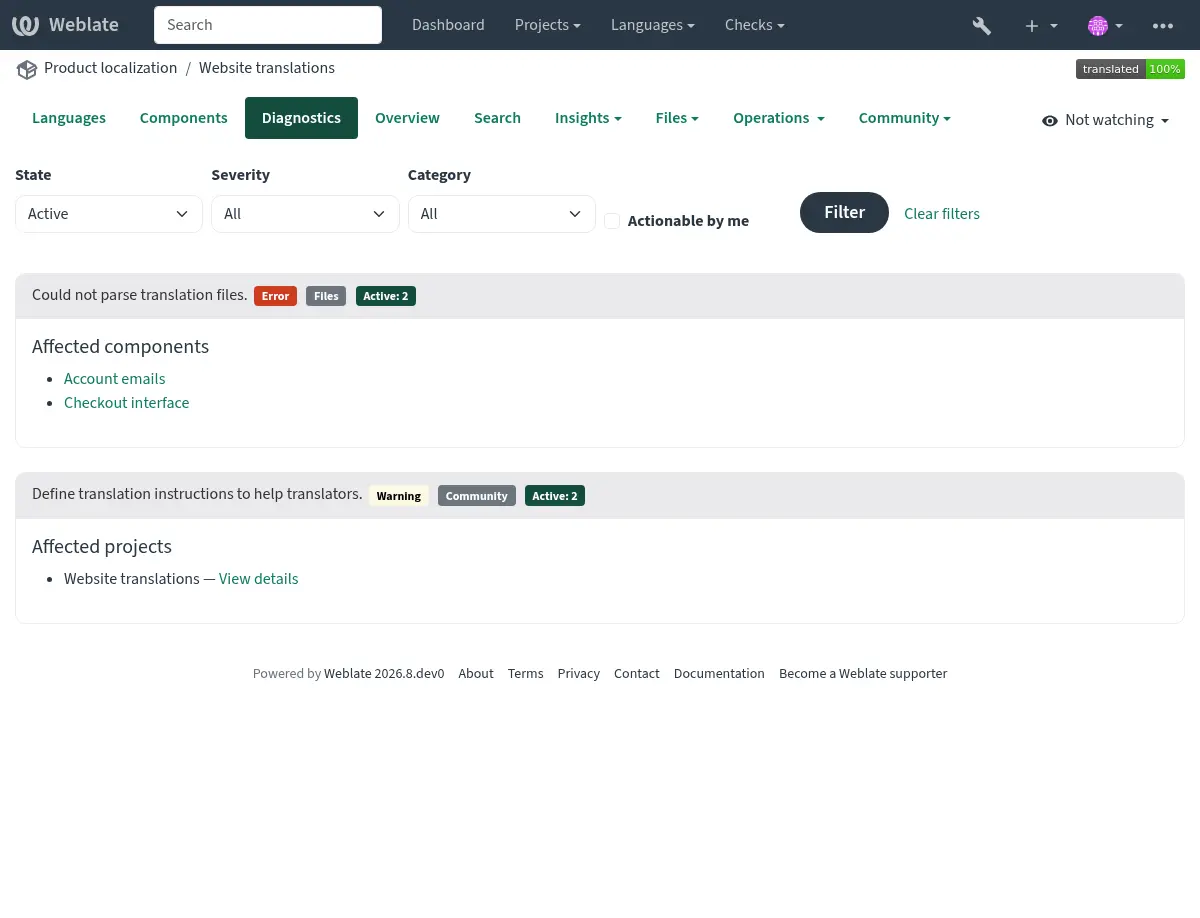
Signed-in users can open the Diagnostics tab on project and workspace pages. The overview is loaded when opened and groups alerts of the same type instead of repeating them for every component.
The project overview shows project-wide findings once and lists the components affected by component-specific findings:
The workspace overview groups project-wide findings by project and identifies components using both the project and component name:
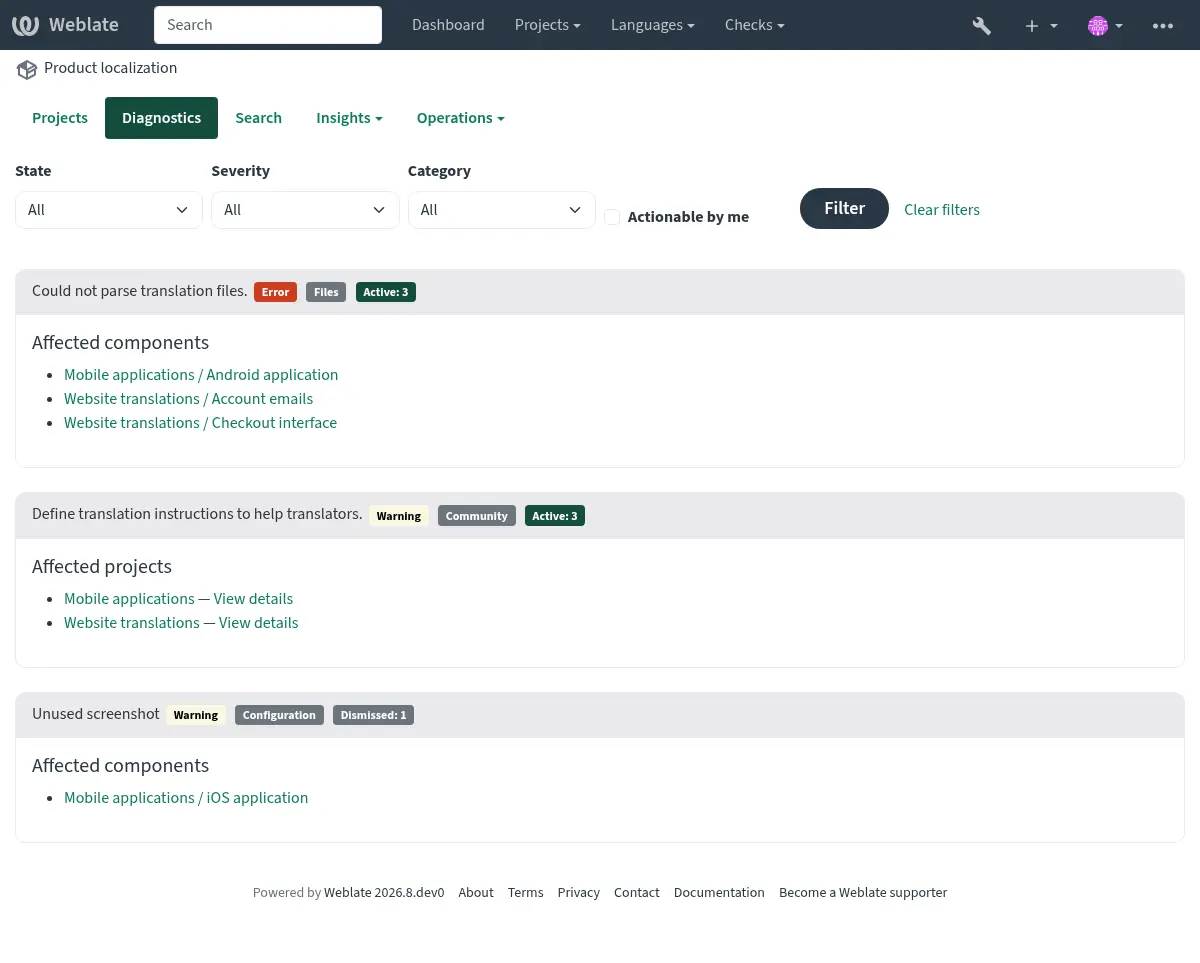
Each finding lists up to 20 affected projects or components. Additional affected objects are shown as a count. Follow a component link to see the complete diagnostic details or dismiss a diagnostic on the component page.
The summary can be filtered by active or dismissed state, severity, category, or whether the signed-in user can act on the diagnostic. Components shared into a project are listed only in the diagnostics of their owning project.
If it is missing, the component clears all current checks. Problem alerts cannot be ignored, but will disappear once the underlying problem has been fixed.
Information and warning alerts are used for guidance on improving community localization. These can be dismissed and make the Diagnostics tab visible, but they do not indicate a component problem in listings.
Dismissed diagnostics record who dismissed them, when they were dismissed, and an optional reason. A dismissal is automatically reopened when the diagnostic details or the configuration relevant to that diagnostic changes. Dismissal and reopening are both recorded in the component change history.
Warning and error notifications are sent only to subscribed project maintainers who have permission to act on the diagnostic. Informational recommendations do not send unsolicited notifications.
Custom alerts can override
BaseAlert.get_dismissal_context(component, details) to include stable,
JSON-serializable configuration or diagnostic inputs. Changing the returned
context reopens a dismissed alert. Incidental values such as evaluation time
should not be included.
O componentă care are atât șiruri de caractere duplicate, cât și limbi arată astfel:
Conflicting repository setup
This alert is shown when multiple Git components are configured to push to the same repository and push branch without all of them pulling from that branch. This includes pull or merge request workflows, and direct pushes to a separate push branch. Such a setup can overwrite the shared branch.
To resolve this, either configure a different Push branch for each
component or share the repository between components using a
weblate://project/component repository URL.